


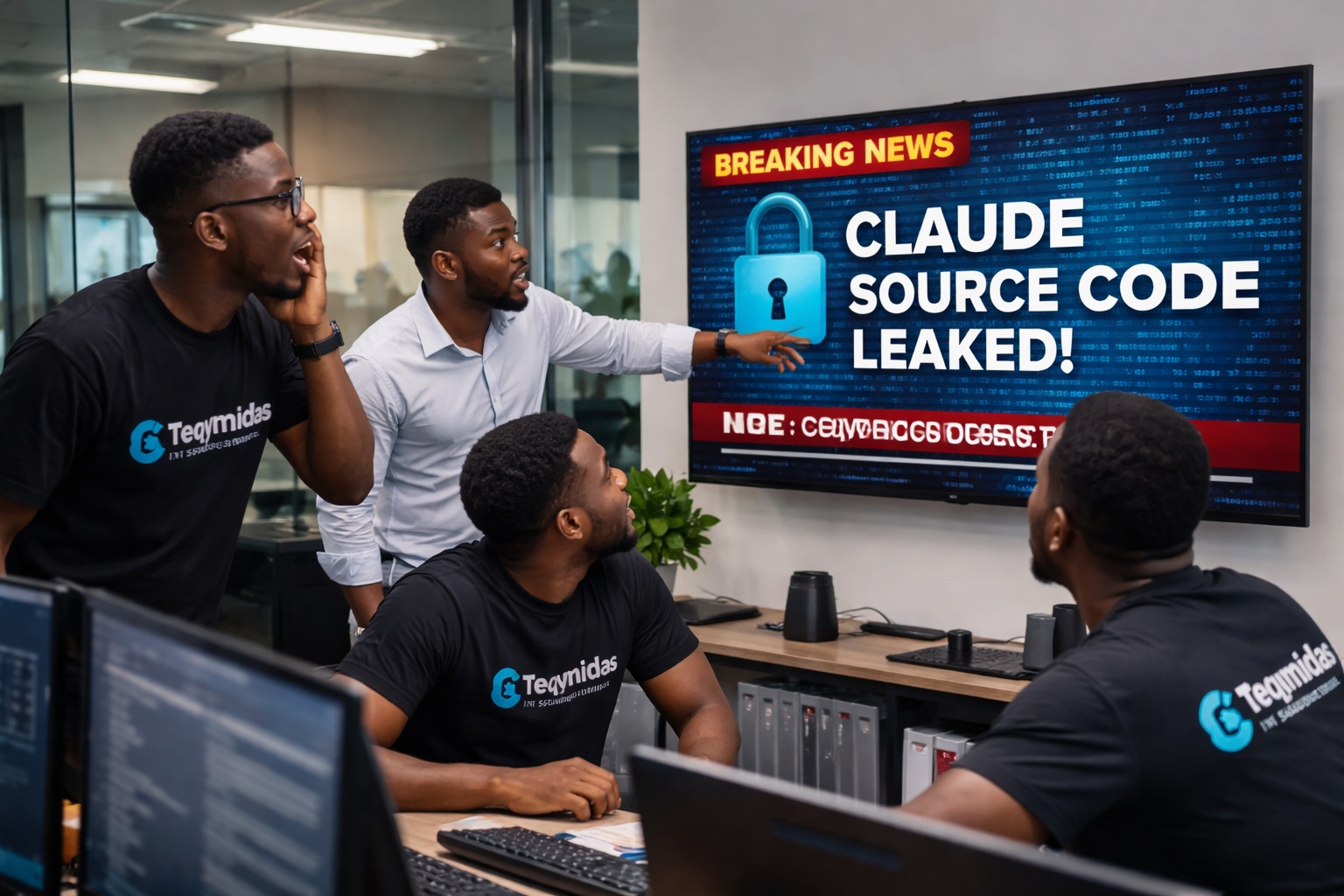
Last week, the AI industry was shaken by a major incident involving Claude. This was not a hack. It was a mistake, and it may have handed competitors a head start.
What Actually Happened
Anthropic accidentally exposed hundreds of thousands of lines of internal source code for its AI coding tool, Claude Code, during a routine software update. The issue came down to a simple but costly oversight. A debug or source map file was mistakenly included in a public package, and that file pointed to an unprotected archive of the full source code. As a result, anyone could download it without needing to hack anything. Within hours, the code was discovered by a security researcher, shared widely on X (Twitter), and mirrored across GitHub and other platforms. By the time it was taken down, it had already spread.
What Was Leaked
The exposure was significant. Over 500,000 lines of code across roughly 1,900 files were made accessible, including internal tools, commands, system logic, and architectural insights into how Claude Code works. Importantly, no customer data or core AI model weights were leaked. However, the impact is still serious.
Why This Leak Matters
This was not just code; it was intellectual property. The leak effectively gave outsiders a look under the hood, allowing developers and competitors to study how one of the most advanced AI coding assistants is built. It also created a shortcut to replication, with some developers reportedly beginning to recreate similar tools within hours. In addition, leaked files included experimental ideas and internal tooling, offering insight into potential future features.
Not a Hack, But Still a Major Failure
Anthropic clarified that this was not a cyberattack but a release packaging error caused by human oversight. That distinction matters, but only to a point. From the outside, the result is the same: sensitive internal technology became public almost instantly.
The Bigger Issue: Operational Security
What makes this incident stand out is how avoidable it was. A single mistake in the deployment pipeline exposed proprietary code, internal architecture, and competitive advantage. It also highlights a broader issue in the AI space, where rapid development is often moving faster than operational discipline.
A Head Start for Competitors
The biggest consequence may not be immediate, but strategic. Rival AI companies can now analyze design decisions, learn from implementation details, and accelerate development of competing tools. In a highly competitive space where time matters, this level of visibility is extremely valuable.
Final Thoughts
The Claude Code leak is a reminder that in modern technology, you do not need a breach to lose control of your systems. Complexity increases the chances of small but costly mistakes, and anything exposed can spread instantly. For an industry built on advanced intelligence, this incident highlights a very human vulnerability. Sometimes, the biggest risks are not attacks. They are oversights.